01BUSINESS OPPORTUNITY
Business Overview
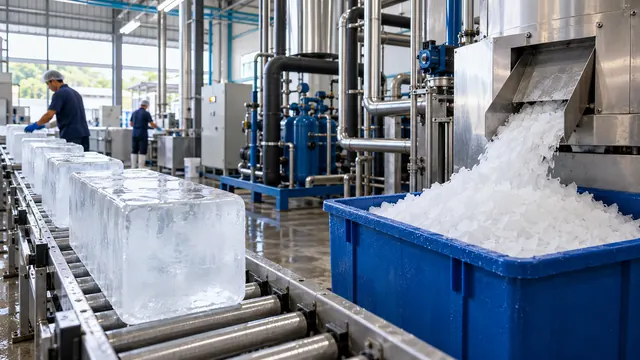
An industrial ice plant is a vital component of the marine fisheries cold chain in the southern part of Eastern Indonesia. NTT's high capture-fisheries production, reaching 5.000 to 10.000 tonnes per month, creates massive demand for ice that is not yet served optimally.
A new ice plant in this area is urgently needed to provision long-range fishing fleets operating in the Sawu Sea, Timor Sea and Indian Ocean (WPPNRI 573 & 714), supply export fish-processing units, and protect inter-island cargo bound for Flores, Sumba and Alor, as well as the Timor-Leste export market.
Building an ice plant at Kawasan Industri Bolok (KIB) offers an absolute competitive advantage because it is located directly at a fisheries logistics hub. The estate is already equipped with reservoir-supported clean water and a stable industrial electricity supply, with a prime location just 7,9 km from Tenau Port and 14,4 km from Kupang City for efficient ice distribution.
Products & Business Formats
- Block ice for provisioning fishing vessels
- Long-lasting solid ice that melts slowly, used to keep fish fresh in the holds of handline and gillnet vessels spending days at sea in Kupang Bay and the Sawu Sea.
- Flake ice & slurry ice for processing plants
- Soft-textured ice that cools quickly and preserves high-value commodities such as red snapper and tuna without damaging fish flesh during handling and filleting at fish-processing units (UPI).
- Crushed ice for fish collectors
- Ready-to-use crushed ice placed directly into insulated boxes (coolboxes) on collectors' vehicles carrying catches from the port to the industrial estate.
- Hygienic tube ice for the hotel, restaurant and catering sector
- Hygienic, food-grade crystalline ice for cooling drinks and fresh food in hotel, restaurant, café, catering and retail-market networks in Kupang City.
Business model
Business revenue combines daily cash sales to fishing fleets and catch collectors with regular supply partnerships (supply contracts) involving fish-processing units (UPI) in the Kupang area, inter-island cargo distributors, and hotel, restaurant and catering customers.
Development stages
- Stage 1 — Initial operations & products for immediate market entry
Begin commercial production using modular flake-ice and tube-ice machines that can operate directly in KIB warehouse facilities to capture the nearest market. - Stage 2 — Network expansion & scheduled distribution
Extend regular supply to fish-landing centres (PPI Oeba), fish-processing plants in Kupang, and hotel, restaurant and catering customers using insulated transport fleets. - Stage 3 — Full-capacity development
Develop a large-capacity block-ice plant and integrated storage warehouse on KIB land plots to serve all long-range fishing fleets and cross-border export transport to Timor-Leste.
02BUSINESS OPPORTUNITY
Market & Potential Buyers
Demand for ice in the Kupang area occurs every day throughout the fish-handling chain, from preparations for fishing trips to land and sea distribution. An ice plant at Kawasan Industri Bolok (KIB) is strategically positioned to serve local fishers, port fleets, and regional and export shipping hubs.
Market Demand & Potential Buyers
- Large-scale fishing fleets
Handline and purse-seine fishing vessels operating in WPPNRI 573 waters (Sawu Sea/Indian Ocean) and WPPNRI 714 waters (Timor Sea), calling at Tenau and Bolok ports. - Fish-processing units (UPI) & cold storage
Export fish-fillet plants and frozen-storage facilities along Kupang's coastal corridor that need hygienic flake ice to maintain the cold chain during processing. - Inter-island distribution & cross-border exports
Insulated-truck fleets and ASDP ferries carrying fisheries commodities to Flores, Sumba and Alor, as well as overland routes to Timor-Leste. - Commercial customers & fresh-fish markets
Hotels, restaurants, cafés and catering businesses, as well as fresh-fish traders in Kupang City's traditional markets.
Trade & market potential
NTT catch volume (5.054,93 – 10.000,54 tonnes/month)
Sectoral data from the NTT Provincial Marine Affairs and Fisheries Office on Portal Satu Data Sasando records monthly capture-fisheries production across all NTT regencies/cities ranging from 5.054,93 tonnes (January 2024) to 10.000,54 tonnes (October 2023), illustrating the scale of routine icing needs at provincial level. Marine Capture Fisheries Production Dataset for East Nusa Tenggara Province
A 7-month fishing season (May–November) & 4 marketing channels at PPI Oeba
Research on tuna and skipjack marketing at PPI Oeba in Kupang City records peak landings during May–November (and a low season during December–April) through 4 main distribution channels, all requiring large volumes of ice. Marketing of Handline Tuna and Skipjack Landed at PPI Oeba
KKP investment offering for a fisheries & cold-chain cluster at Bolok
The Ministry of Marine Affairs and Fisheries (2025) includes the development of fish-processing facilities and a cold-chain logistics centre at Kawasan Industri Bolok in its national investment offering list, which will multiply future demand for ice within the estate. Fisheries Processing and Cold Chain Logistics Investment Offering at Bolok
KKP cold-chain standards from vessel to distribution
Technical guidance from Badan Mutu KKP prescribes the use of ice during on-board handling, landing, land transport and processing to slow the deterioration of fish quality. Understanding the Cold Chain to Preserve Fish Quality
Competition & market gaps
Ice demand in Kupang City and Kupang Regency is currently served by existing producers in two distinct market segments: (1) block-ice plants serving fishing fleets and collectors around PPI Oeba and fish-landing centres, and (2) small-to-medium tube/crystalline ice producers supplying hotels, restaurants and food businesses in Kupang City. Detailed public data on each existing Kupang ice plant's installed capacity and actual production volume has not been published, so investors are advised to survey local selling prices and supply capacity.
New businesses at KIB have substantial opportunities in three main gaps: industrial-processing-grade flake ice that is not yet served optimally; additional supply during the peak fishing season (May–November), when demand rises sharply; and direct service for cold-chain activities along the Bolok–Tenau logistics corridor.
03BUSINESS OPPORTUNITY
Raw Materials & Supply
Unlike processing plants that depend on seasonal harvests, an ice plant's main inputs are clean water and electricity, both already available within the infrastructure of Kawasan Industri Bolok (KIB). This ensures year-round operational certainty without a risk of raw-material shortages.
Raw material sources and requirements| Materials & requirements | Supply sources | Quality & efficiency factors |
|---|
| Clean water (ice raw material & condenser cooling) | KIB's clean-water distribution network, supported by the estate's reservoir facilities. | Filtered and UV-sterilised to produce clear, odourless ice that is safe for direct contact with food products. |
|---|
| Main electricity supply (compressors & rooftop solar efficiency option) | KIB's estate electricity network and opportunities to use rooftop solar energy. | A stable electricity supply for continuous freezing, which can be combined with rooftop solar to reduce daily electricity costs (a study of a 25 kWp system in Kupang City recorded maximum efficiency of 85,60% and savings of 208,60 kWh over 7 days). |
|---|
| Industrial salt (NaCl / CaCl₂ for block-ice tanks) | Local NTT industrial-salt supplies or shipments through Tenau Port. | Maintains the freezing point of the brine solution in block-ice moulding tanks so freezing proceeds quickly and evenly. |
|---|
Seasonality & Supply Continuity
Production operates throughout the year, with adjustments to market allocation. During May–November (the peak catch season at PPI Oeba), full production capacity is directed towards meeting increased demand from fishing vessels and collectors. During December–April, production focuses on regular supply contracts with fish-processing units (UPI), hotel, restaurant and catering customers, and replenishing ice-storage stocks.
Collection & shipping
Ice distribution from KIB is supported by paved main roads within the estate, with direct access to the West Kupang coast, Bolok Ferry Port, Tenau Port and fish-landing centres in Kupang City. This direct access minimises travel time and melting losses during delivery.
Procurement & handling costs
The largest operating-cost components of an ice plant are refrigeration-machine electricity consumption and clean-water availability. The estate's water reservoir and the potential use of rooftop solar at KIB are key factors in maintaining long-term production-cost efficiency.
04BUSINESS OPPORTUNITY
Why Consider KIB
Kawasan Industri Bolok (KIB) is located directly at a fisheries-port hub for the Sawu and Timor seas, fully supported by reservoir-backed clean water and the estate electricity network to serve regional maritime fleets efficiently.
- Reservoir-supported clean water & estate electricity are already available
- KIB has provided the two essential utilities for an ice plant—clean water backed by an independent reservoir and an industrial electricity network—reducing preparation time and accelerating the start of commercial production. Bolok Industrial Park Profile
- Aligned with KKP's cold-chain cluster development direction at Bolok
- In addition to serving existing PPI Oeba fleets and fish-processing units (UPI) in the Kupang area, a KIB location places the ice plant directly in the estate promoted by the Ministry of Marine Affairs and Fisheries (2025) for fish-processing and cold-chain logistics development. Fisheries Processing and Cold Chain Logistics Investment Offering at Bolok
05BUSINESS OPPORTUNITY
Business Development Requirements
Production facilities can be developed to match the target business capacity. At small-to-medium scale, modular flake-ice or tube-ice machine packages can be installed directly in ready-to-use warehouse buildings after adapting water, drainage and electrical installations. A large-capacity block-ice plant using brine tanks requires purpose-built facilities on a land plot, including heavy-load foundations and an overhead-crane structure.
Business process
- Raw-water purification: Filter clean water from the estate's reservoir network using media filters and UV sterilisation to ensure hygienic ice.
- Freezing: Freeze water in evaporator machines for flake/tube ice or in moulds within brine tanks for block ice.
- Harvesting & storage: Harvest ice automatically and store it temporarily in insulated ice-storage rooms to maintain stock availability.
- Product preparation: Crush block ice into bulk ice or package it in bags to meet customer-order specifications.
- Rapid loading: Load ice through a chute directly into insulated boxes (coolboxes) on collectors' trucks and fishing-fleet vehicles.
Initial Capacity & Production Scale
- Concrete flooring to support brine tanks & hoist cranes
- A block-ice line requires a floor-foundation structure capable of supporting brine tanks and a crane system that lifts rows of ice moulds.
- Raw-water treatment plant
- Comprises daily holding tanks, sediment and activated-carbon filters, and UV sterilisation to ensure ice hygiene and clarity.
- Insulated ice-storage room
- Stores ice produced overnight so it can be loaded simultaneously when fishing fleets and collectors' trucks arrive in the morning.
- Covered loading bay with an ice crusher
- Speeds up loading bulk ice directly into customers' vehicle coolboxes without exposure to sunlight, reducing melting losses.
Special production facilities (business operator investment)
The main equipment to be provided by the business operator comprises brine tanks and block-ice moulds, overhead hoist cranes, flake/tube ice machines, insulated ice-storage rooms, water-filtration & UV installations, an ice crusher, and a truck loading dock.
This complete set of facilities positions the plant as a main industrial ice-supply centre for long-range fishing fleets in the southern waters of Eastern Indonesia and the fisheries-processing network in the Kupang area.
06BUSINESS OPPORTUNITY
Facilities at KIB
Kawasan Industri Bolok (KIB) provides Kawasan I, with a total area of 191 hectares under Hak Pengelolaan Lahan (HPL), leasable in flexible plot sizes suited to project needs, as well as standard warehouse buildings ready for lease. The facilities below are basic estate infrastructure already available at KIB; production machinery and plant-specific civil works/utilities fall within the business operator's investment scope.
- Kawasan I (191 Ha HPL in total) & flexible plots
- Kawasan I totals 191 ha with clean & clear HPL status, and leased plot sizes can be adjusted to the scale of an ice plant or logistics depot.
- Standard warehouse buildings ready for lease
- Basic warehouse buildings ready for storage activities or installation of light/modular ice-machine packages; special technical modifications are carried out by the tenant.
- Paved estate main roads
- Paved road access within the estate facilitates goods-truck and container movements to Bolok Port (3,6 km) and Tenau Port (7,9 km).
- Clean-water network & reservoir
- Estate clean-water distribution supported by an independent reservoir; further water treatment (such as RO/UV) is provided by each plant.
- Estate electricity network
- Electricity-network infrastructure within the estate for connecting operational power; dedicated transformers or standby generators are provided to suit the plant load.
- Fibre optics & estate lighting
- Availability of a fibre-optic telecommunications network, estate street lighting, and green open spaces.
Site Suitability & Building Delivery Boundaries
KIB offers standard warehouse buildings ready for lease (ideal for initial modular ice-machine packages) and land plots in Kawasan I (a total HPL area of 191 ha, with leased plot sizes tailored to the needs of a full-scale plant). Special civil works such as brine-tank foundations, overhead-crane structures, insulated storage rooms and RO/UV water-filtration units fall within the business operator's investment scope.
Prospective investors can discuss plot-area requirements, technical specifications of ready-to-lease warehouse buildings, electricity capacity and raw-water flow with the KIB team to support preparation of a detailed feasibility study.
The PT Kawasan Industri Bolok (Perseroda) team is ready to facilitate estate data, site visits, and initial coordination on land/building leases and business licensing.
Estate Facilities Profile ↗BUSINESS OPPORTUNITY
Risks & Considerations
Investment in an ice plant needs to account for price competition with producers already operating in Kupang, seasonal demand fluctuations, electricity-cost efficiency, and continuity of the raw-water supply.
- Price competition and transport distance relative to existing ice plants
- Ice producers nearer PPI Oeba or central Kupang City have shorter delivery distances to daily buyers. A KIB plant must account for insulated-truck transport efficiency (14,4 km to Kupang City) and control melting losses in transit.
- Lower market demand during the low-catch season (December–April)
- Demand for capture-fisheries ice generally falls significantly during the westerly monsoon (December–April). Capacity designed solely around the peak season (May–November) risks low utilisation for five months unless balanced by regular supply contracts with UPI and hotel, restaurant and catering customers.
- Production-cost sensitivity to electricity tariffs and reliability
- Refrigeration compressors and circulation pumps are the largest operating-cost components of an ice plant. Changes in electricity costs or outages requiring diesel-fuelled generators can directly reduce business profit margins.
- Continuity of raw-water flow and water hardness in the dry season
- Ice production requires a continuous supply of clean water every day. In Kupang's dry tropical climate, with relatively high limestone content (hardness) in groundwater, operators need to ensure sufficient supply from the estate reservoir and budget for regular water-filter maintenance.
08BUSINESS OPPORTUNITY
Studies & References
Data sources include PLN industrial tariff schedules for NTT, Kupang fisheries department ice demand estimates, and industrial refrigeration engineering benchmarks.
Technical Guide· 2024
Understanding the Cold Chain to Preserve Fish Quality
Ministry of Marine Affairs and Fisheries (KKP)· Indonesia
Read summary
Technical guidelines from the MMAF Quality Agency outlining cold chain management (measured ice-to-fish ratios, chilled/frozen temperature-controlled storage, and refrigerated transport) across the supply chain from initial catch to distribution.
Accessed 2026-10-19
Industrial Park & Logistics· 2025
Fisheries Processing and Cold Chain Logistics Investment Offering at Bolok
Ministry of Marine Affairs and Fisheries (KKP)· Bolok, East Nusa Tenggara
Read summary
At the Harkannas 2025 investment forum, MMAF (KKP) showcased 36 investment projects valued at IDR 3.02 trillion (attracting IDR 1.60 trillion in investor commitments)—specifically highlighting the development of fisheries processing facilities and a regional cold chain logistics hub at Bolok Industrial Park, NTT.
Accessed 2026-10-19
Regional Data· 2025
Marine Capture Fisheries Production Dataset for East Nusa Tenggara Province
NTT Marine and Fisheries Agency (DKP NTT) · Satu Data NTT (Sasando)· East Nusa Tenggara
Read summary
Official DKP NTT fisheries dataset (updated September 25, 2025) recording provincial marine landings between 5,054.93 and 10,000.54 tons per month of tuna, skipjack, red snapper, grouper, and pelagics.
Accessed 2026-10-19
Regional Data· 2024
WebGIS 2023 Agricultural Census (ST2023) of East Nusa Tenggara Province
BPS - Statistics Indonesia· East Nusa Tenggara
Read summary
Geospatial census mapping across NTT documenting 674,336 food crop production units (predominantly corn), 33,891 fishery business units, and 149,000 hectares of coconut estates, quantifying the hinterland supply base for KIB.
Accessed 2026-10-19
Research· 2023
Marketing of Handline Tuna and Skipjack Landed at PPI Oeba
Jurnal Bahari Papadak · Universitas Nusa Cendana· PPI Oeba, Kupang
Authors: Lada, Yahyah & Saraswati
Read summary
A study of handline tuna and skipjack landed at PPI Oeba in Kupang City mapped 4 principal marketing channels, confirming steady raw material availability and showing strong value-add potential for centralized cold freezing in Bolok.
Accessed 2026-10-19
Research· 2025
Solid Secondary Product Yield in Red Snapper Fillet Processing at PT Matsyaraja Arnawa Stambhapura
Jurnal Bahari Papadak · Universitas Nusa Cendana· Kupang City
Authors: Tore, Soewarlan & Toruan
Read summary
A 2024 empirical study of 100 red snapper processing samples at PT Matsyaraja Arnawa Stambhapura in Kupang City recorded total marketable utilization of 75.45% (fillet yield 40.54%, head 30.65%, and meat trimmings 4.26%), establishing local benchmarks for fillet freezing and by-product processing.
Accessed 2026-10-19
Research· 2025
Operational Analysis of Rooftop Solar PV at GMIT Kaisarea Kolhua Kupang
Universitas Nusa Cendana· Kolhua, Kupang City
Authors: Reflianus H. Nahas, Frans J. Likadja & Wellem F. Galla
Read summary
Empirical performance analysis of a grid-connected rooftop solar installation in Kupang showed peak solar insolation exceeding 4.8–5.2 peak sun hours per day with a high performance ratio, demonstrating strong economics for factory rooftop PV arrays in KIB.
Accessed 2026-10-19
Industrial Park & Logistics· 2026
Road Distances from KIB Bolok to Key Port, City, and Airport Hubs
OpenStreetMap · OSRM Routing· Bolok, Tenau, Kupang City & El Tari Airport
Read summary
Calculated highway route distances from KIB Bolok: 3.6 km to Bolok ASDP Ferry Terminal, 7.9 km to Tenau Container Port, 14.5 km to central Kupang commercial district, and 25.0 km to El Tari International Airport.
Accessed 2026-10-19
Industrial Park & Logistics
Bolok Industrial Park Profile
PT Kawasan Industri Bolok (Perseroda)· Bolok, West Kupang
Read summary
Official profile of the Bolok Industrial Park (Phase I covers 191 hectares with clean & clear HPL land title, flexible lease plots, ready-to-use standard factory/warehouse units, paved primary roads, clean water reservoir system, three-phase industrial power, and fiber-optic connectivity).
Accessed 2026-10-19
BUSINESS OPPORTUNITY
Next Steps
Interested in developing this business at KIB?
Tell the KIB team which ice products you plan to develop (block ice, flake ice, tube ice or a combination), your target production capacity, and your preferred location arrangement—either a ready-to-lease warehouse building or a land plot—to begin discussions and technical assistance.
Discuss your business plan ↗ Complete your business supply chain
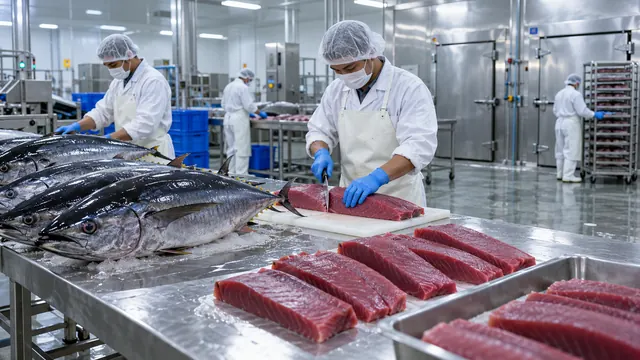
Seafood Processing & Rapid Freezing (Fillets, Loins & Frozen Whole Fish)
Establish a modern processing and rapid-freezing plant at KIB for demersal whitefish fillets, pelagic steaks, and IQF packs, leveraging NTT’s 5,054–10,000 tonnes/month catch for inter-island and export markets.
View details →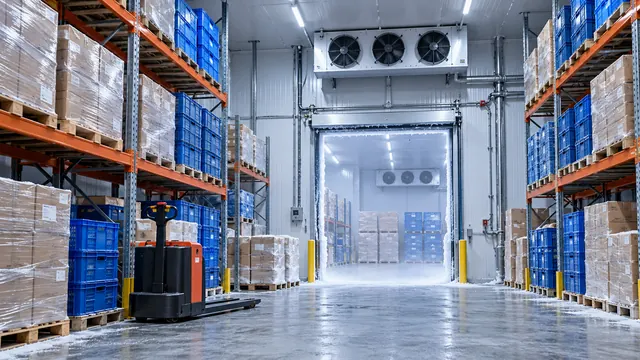
Multi-Temperature Commercial Cold Storage & Reefer Container Depot
Independent multi-temperature cold storage facility (-25°C frozen / +4°C chilled) and reefer container plug-in depot serving seafood, meat, poultry, and pharmaceutical supply chains in Timor.
View details →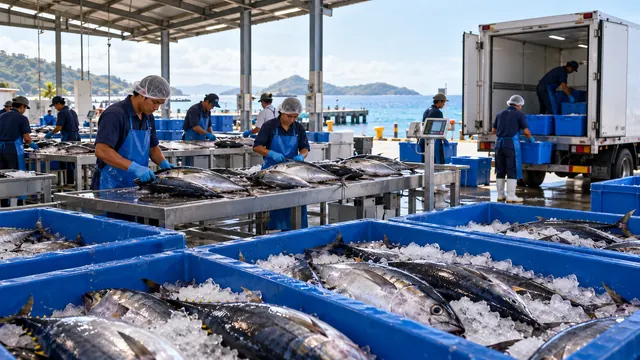
Dedicated Fishery Terminal, Cold Chain Staging & Marine Bunkering Hub
Develop a dedicated marine offloading jetty, cold storage consolidation depot, and bunker supply base serving Savu Sea and Timor Sea fishing fleets with direct land connectivity to KIB.
View details →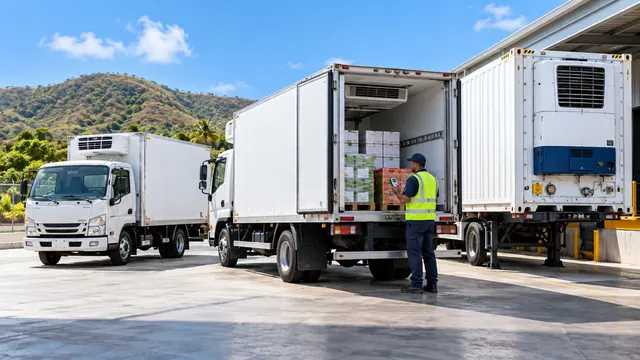
Refrigerated Transport Fleet & Cold Chain Drayage Services
Deploy a specialized fleet of temperature-controlled refrigerated trucks (2–10 tonnes) and multi-axle reefer container chassis supporting cold-chain logistics across Timor and inter-island gateways.
View details →