01BUSINESS OPPORTUNITY
Business Overview
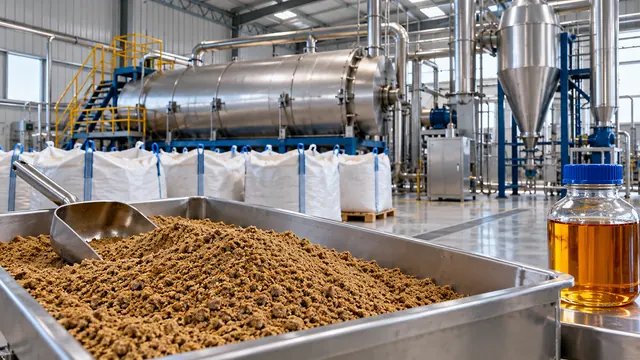
Industrial filleting of marine fish generates between 24.5% and 35.0% non-edible processing residues, including bones, fins, viscera, and scales. In the absence of localized rendering facilities, these organic streams create severe disposal liabilities and environmental fouling. This valorization project establishes a closed-loop rendering plant in KIB that utilizes steam cooking, twin-screw pressing, defatting, and flash drying to convert fish offal and seasonal pelagic by-catches into high-protein fishmeal (60–65% crude protein) and crude fish oil. Located in KIB, the plant enjoys natural circular synergies with adjacent seafood processing tenants, eliminates raw material haulage costs, and supplies high-demand feed mills across Timor and Eastern Indonesia.
Products & Business Formats
- High-Protein Commercial Fishmeal (60%–65% Crude Protein)
- Steam-cooked, defatted, flash-dried, and finely ground marine fishmeal packed in 50 kg multiwall polypropylene bags for commercial animal feed mills.
- Crude Marine Fish Oil (Industrial & Feed Grade)
- Separated and clarified natural marine fish oil stored in 200-liter drums or 1,000-liter IBC totes for aquaculture feeds and industrial lubricants.
- Soluble Fish Protein Concentrate (Liquid Hydrolysate)
- Enzymatically digested soluble protein liquid extracted from stickwater, utilized as an ultra-high-digestibility feed attractant for shrimp and piglets.
- Marine Calcium Bone Powder
- Washed, calcined, and micronized fish bone meal used as a natural organic calcium and phosphorus supplement for poultry and pet food formulations.
Business model
The advantage of this business model lies in very low raw-material costs because inputs come from fish-processing plant residues, while the final product (fishmeal) has direct buyers in the local Kupang animal-feed industry and inter-island markets.
Development stages
- Stage 1 — Use ready-to-lease buildings at KIB to install a compact fishmeal line (cooker, screw press, dryer & hammer mill) to absorb solid waste from UPI in Kupang.
- Stage 2 — Establish regular fishmeal supply contracts with feed-production units in Kupang City and Kupang Regency and separate crude fish oil.
- Stage 3 — Develop a fish-scale/skin washing and drying line meeting collagen raw-material standards and expand plant capacity on KIB HPL land plots.
02BUSINESS OPPORTUNITY
Market & Potential Buyers
East Nusa Tenggara’s large livestock population (over 593,000 cattle and extensive swine herds) depends heavily on balanced feed rations. Currently, local feed mixers import expensive fishmeal by ship from Surabaya or South America. Operating inside KIB provides direct captive access to offal from neighboring seafood processors with zero intermediate shipping costs.
Market Demand & Potential Buyers
- Commercial pig, poultry, and ruminant feed manufacturers across Timor, Flores, and Sumba
- Local commercial aquaculture farms and shrimp hatcheries across Eastern Indonesia
- Animal feed conglomerates in Surabaya and East Java seeking domestic high-protein fishmeal
- Bio-fertilizer and organic agricultural input formulators in NTT
Market Evidence & Context
High Regional Demand for Animal Feed Protein
NTT’s extensive swine and poultry farming sector suffers from chronic protein deficiencies in local feed diets, driving robust demand for affordable local fishmeal. Beef Cattle Population by Province, 2024
There is currently no modern, industrial-scale fishmeal rendering plant operating in NTT. Most fish filleting offal and small pelagic by-catches are discarded into landfills, sold as fresh chum, or dried crudely on open ground with high fly and bacterial contamination. A closed-loop rendering plant in KIB enjoys a virtual regional monopoly on certified high-protein fishmeal.
03BUSINESS OPPORTUNITY
Raw Materials & Supply
Raw feedstock is collected through long-term supply agreements with seafood processing facilities in KIB, PPI Oeba landing docks, and regional fish markets.
Raw material sources and requirements| Materials & Requirements | Procurement Source | Quality & Key Specifications |
|---|
| Seafood Processing Offal (Fish Frames, Heads, Viscera) | Filleting and freezing plants inside KIB and Kupang municipality. | Fresh processing residues, chilled with ice, free from chemical decomposition (TVB-N < 40 mg/100g). |
|---|
| Low-Value Pelagic By-Catch (Trash Fish / Small Pelagics) | Trawl, purse seine, and coastal gillnet fleets landing at Kupang ports. | Whole small marine fish, iced on vessel, fresh condition. |
|---|
| Process Steam & Boiler Fuel | Captive biomass wood pellets or agricultural briquettes sourced within KIB. | High-temperature industrial process steam (6–8 bar) for continuous cooker operation. |
|---|
Seasonality & Supply Continuity
Feedstock availability peaks during the May–November marine fishing season. In lean months, the plant processes frozen by-catch blocks or transitions to drying shrimp shell residues.
Collection & shipping
Raw offal from KIB seafood plants is transferred within 3–5 minutes via sealed tipper trucks. City offal arrives within 20 minutes in covered leak-proof containers.
Procurement & handling costs
Raw fish offal is acquired at low nominal cost or negative tipping fees. Thermal energy for cooking and drying represents the largest operational cash expense (35%–45% of processing cost).
04BUSINESS OPPORTUNITY
Why Consider KIB
Locating in KIB establishes a textbook circular economy cluster: co-located next to raw offal generators, equipped with estate AMDAL zoning, and close to port export gates.
- Captive Supply from Neighboring Seafood Processors in KIB
- Direct inter-estate transfer of fresh fish frames and offal eliminates long-distance trucking and prevents bacterial spoilage before rendering. Bolok Industrial Park Profile
- Estate AMDAL Zoning for Thermal Rendering & Odor Control
- Industrial estate zoning legally accommodates rendering facilities equipped with bio-filters and wet scrubbers, avoiding urban residential nuisance complaints. Bolok Industrial Park Profile
05BUSINESS OPPORTUNITY
Business Development Requirements
Investors can deploy a compact, continuous dry-rendering package plant (10–30 TPD raw input capacity) designed with closed odor-scrubbing systems.
Business process
- Raw fish offal receiving in enclosed negative-pressure intake pit, magnetic separation, and heavy-duty pre-crushing
- Continuous indirect steam cooking (90°C–95°C) to coagulate protein and rupture fat cells
- Twin-screw mechanical pressing to separate cooked press-cake from liquid press-water (slurry)
- Centrifugal tricanter separation of liquid phase into crude fish oil and stickwater protein concentrate
- Flash drying of press-cake in indirect steam disc dryers to achieve moisture content below 10%
- Hammer milling, antioxidant dosing (BHT/tocopherol), cooling, and bagging into 50 kg multiwall sacks
Initial Capacity & Production Scale
- Continuous Steam Rendering Cooker & Disc Dryer
- Industrial indirect steam rendering cooker and rotary disc dryer engineered for continuous automatic operation.
- Two-Stage Odor Mitigation & Wet Venturi Scrubber System
- Negative-pressure building ventilation ducting all process vapors through chemical condensation towers and biological wood-chip bio-filters.
- Tricanter High-Speed Centrifugal Separator
- Industrial centrifuge to cleanly separate crude fish oil from stickwater and fine solids.
- On-Site Modular Wastewater Pre-Treatment
- Under KIB’s estate AMDAL framework, tenant installs dissolved air flotation (DAF) and settling basins to pre-treat high-COD washdown effluent before regulated discharge.
Dedicated Production Facilities (Investor Scope)
Enclosed negative-pressure intake bunker, continuous steam cooker, twin-screw press, disc dryer, tricanter centrifuge, venturi condenser/odor bio-filter system, and on-site DAF wastewater pre-treatment skid.
Converting local seafood offal and trash fish into 65% protein fishmeal captures massive margin differentials between raw offal acquisition costs and high-priced finished animal feed ingredients.
06BUSINESS OPPORTUNITY
Estate Facilities Available at KIB
Bolok Industrial Park (KIB) prepares Phase I with a total area of 191 hectares under clean & clear Right of Management (HPL) land titles with flexible plot sizing, alongside ready-to-lease standard industrial warehouses. The facilities below represent the core estate infrastructure provided by KIB, while tenant-specific production machinery and specialized civil/utility works remain the investor's scope.
- Phase I (Total 191 Ha HPL) & Flexible Plot Sizing
- Clean & clear HPL land title spanning 191 hectares in Phase I, with plot boundaries customized to factory or logistics yard requirements.
- Standard Ready-to-Lease Warehouses
- Basic turn-key warehouse structures ready for storage or lightweight modular machine assembly; specialized retrofits installed by tenant.
- Paved Heavy-Duty Main Estate Roads
- Dedicated estate road network engineered for heavy truck and container maneuvers connecting to Bolok Port (3.6 km) and Tenau Port (7.9 km).
- Clean Water Grid & Distribution Reservoirs
- Industrial water distribution network backed by on-site storage reservoirs; advanced water purification (e.g., RO/UV) configured per plant.
- Estate Electrical Power Grid
- Medium-voltage power grid connections for operational loads; dedicated transformers or backup generator sets installed per plant load profile.
- Fiber Optic Telecom & Estate Street Lighting
- High-speed optical fiber connectivity, environmental street illumination, and planned green buffer zones across the estate.
Site Suitability & Building Delivery Boundaries
Dedicated heavy manufacturing plots positioned in the western sector of KIB Zone I, aligned downwind of food processing facilities and equipped with direct drainage access.
Prospective investors are advised to consult with the KIB management team regarding exact plot sizes, standard warehouse technical specifications, electrical power capacity, and water flow rates prior to concluding detailed feasibility studies.
The management team of PT Kawasan Industri Bolok (Perseroda) assists local, national, and international investors (Timor-Leste, Australia, China, etc.) from initial site inspection through to leasing and operational licensing.
Estate Facilities Profile ↗BUSINESS OPPORTUNITY
Risks & Considerations
Primary operational risks include process odor containment, feedstock freshness variability, and boiler fuel cost control.
- Severe odor emissions triggering complaints from surrounding estate tenants
- Enclose all processing equipment in airtight negative-pressure buildings and route all vapors through multi-stage condensers, chemical scrubbers, and active bio-filters.
- Feedstock spoilage during high-temperature transit increasing histamine and TVB-N
- Enforce chilled receiving protocols with ice dosing and implement maximum 4-hour processing windows from collection to cooker.
- High energy consumption from steam boiler operation
- Fuel boilers with cheap local biomass pellets or coconut shell briquettes produced within KIB to lower steam generation costs.
08BUSINESS OPPORTUNITY
Studies & References
Data sources include Undana fish processing by-product studies, Ministry of Environment PP 22/2021 circular waste regulations, and Indonesian feed mill raw material specifications.
Research· 2025
Solid Secondary Product Yield in Red Snapper Fillet Processing at PT Matsyaraja Arnawa Stambhapura
Jurnal Bahari Papadak · Universitas Nusa Cendana· Kupang City
Authors: Tore, Soewarlan & Toruan
Read summary
A 2024 empirical study of 100 red snapper processing samples at PT Matsyaraja Arnawa Stambhapura in Kupang City recorded total marketable utilization of 75.45% (fillet yield 40.54%, head 30.65%, and meat trimmings 4.26%), establishing local benchmarks for fillet freezing and by-product processing.
Accessed 2026-10-19
Technology Application· 2024
Local-Raw-Material Based KUB Chicken Feed Processing Technology at P4S Afro Farm Baumata
Jurnal Pengabdian Masyarakat Peternakan · Politani Kupang· Baumata, Kupang Regency
Authors: Nalle, Helda, Sinlae, Kusumaningrum, Tabun & Vertygo
Read summary
Implementation of KUB chicken starter and grower feed production in mash, pellet, and crumble forms at P4S Afro Farm Baumata using local yellow corn and agro-industrial by-products, proving high nutritional performance from local inputs.
Accessed 2026-10-19
Research· 2022
Pig Feed Industry Competitiveness: Case Study in Kupang City, East Nusa Tenggara
International Journal of Social Science Research and Review· Kupang City
Authors: Agus A. Nalle, Thomas Lapenangga, Victor J. Ballo, Hamza H. Wulakada
Read summary
Policy Analysis Matrix (PAM) assessment of local pig feed manufacturing in Kupang, showing Private Cost Ratios (PCR) and Domestic Resource Cost Ratios (DRC) well below 1, confirming strong import-substitution competitiveness.
Regional Data· 2024
WebGIS 2023 Agricultural Census (ST2023) of East Nusa Tenggara Province
BPS - Statistics Indonesia· East Nusa Tenggara
Read summary
Geospatial census mapping across NTT documenting 674,336 food crop production units (predominantly corn), 33,891 fishery business units, and 149,000 hectares of coconut estates, quantifying the hinterland supply base for KIB.
Accessed 2026-10-19
Regional Data· 2025
Marine Capture Fisheries Production Dataset for East Nusa Tenggara Province
NTT Marine and Fisheries Agency (DKP NTT) · Satu Data NTT (Sasando)· East Nusa Tenggara
Read summary
Official DKP NTT fisheries dataset (updated September 25, 2025) recording provincial marine landings between 5,054.93 and 10,000.54 tons per month of tuna, skipjack, red snapper, grouper, and pelagics.
Accessed 2026-10-19
Industrial Park & Logistics· 2026
Road Distances from KIB Bolok to Key Port, City, and Airport Hubs
OpenStreetMap · OSRM Routing· Bolok, Tenau, Kupang City & El Tari Airport
Read summary
Calculated highway route distances from KIB Bolok: 3.6 km to Bolok ASDP Ferry Terminal, 7.9 km to Tenau Container Port, 14.5 km to central Kupang commercial district, and 25.0 km to El Tari International Airport.
Accessed 2026-10-19
Industrial Park & Logistics
Bolok Industrial Park Profile
PT Kawasan Industri Bolok (Perseroda)· Bolok, West Kupang
Read summary
Official profile of the Bolok Industrial Park (Phase I covers 191 hectares with clean & clear HPL land title, flexible lease plots, ready-to-use standard factory/warehouse units, paved primary roads, clean water reservoir system, three-phase industrial power, and fiber-optic connectivity).
Accessed 2026-10-19
Research· 2023
Marketing of Handline Tuna and Skipjack Landed at PPI Oeba
Jurnal Bahari Papadak · Universitas Nusa Cendana· PPI Oeba, Kupang
Authors: Lada, Yahyah & Saraswati
Read summary
A study of handline tuna and skipjack landed at PPI Oeba in Kupang City mapped 4 principal marketing channels, confirming steady raw material availability and showing strong value-add potential for centralized cold freezing in Bolok.
Accessed 2026-10-19
Regional Data· 2025
Beef Cattle Population by Province, 2024
BPS - Statistics Indonesia· East Nusa Tenggara & Indonesia
Read summary
Official BPS livestock census recording NTT beef cattle herd at 593.64 thousand head in 2024, ranking NTT among Indonesia’s premier cattle-producing provinces and securing steady raw material supply for meat processing at KIB.
Accessed 2026-10-19
Standards & Regulations· 2021
Government Regulation Number 22 of 2021 on Environmental Protection and Management
Government of the Republic of Indonesia· Indonesia
Read summary
Omnibus environmental regulation defining handling, licensing, storage, and recycling requirements for hazardous (B3) and non-hazardous industrial waste, governing environmental compliance for all KIB tenants.
Accessed 2026-10-19
BUSINESS OPPORTUNITY
Next Steps
Interested in developing this business at KIB?
Present proposed rendering line capacity (TPD raw input) and detailed odor control design specifications to KIB management to finalize plot selection.
Discuss your business plan ↗ Complete your business supply chain
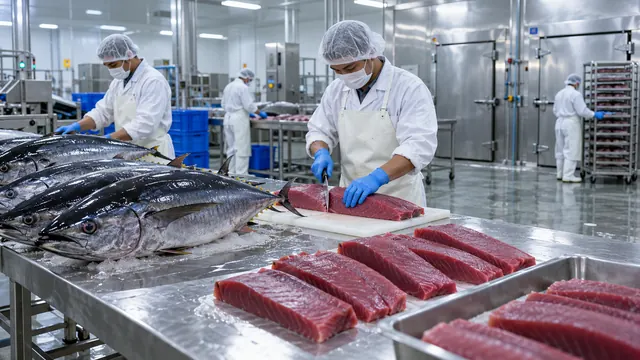
Seafood Processing & Rapid Freezing (Fillets, Loins & Frozen Whole Fish)
Establish a modern processing and rapid-freezing plant at KIB for demersal whitefish fillets, pelagic steaks, and IQF packs, leveraging NTT’s 5,054–10,000 tonnes/month catch for inter-island and export markets.
View details →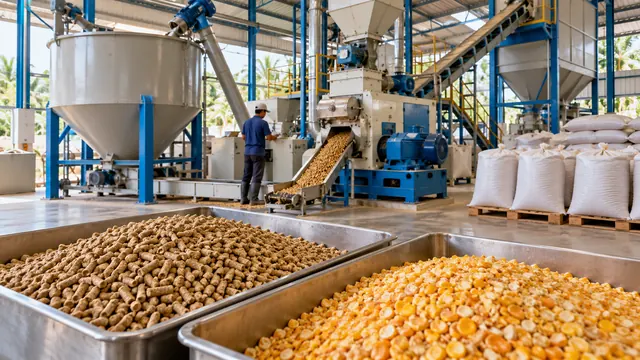
Integrated Commercial Livestock & Aquaculture Feed Manufacturing
Manufacture balanced commercial feeds for swine, cattle, poultry, and aquaculture by consolidating Timor corn, local fishmeal, and limestone with high domestic resource cost advantage.
View details →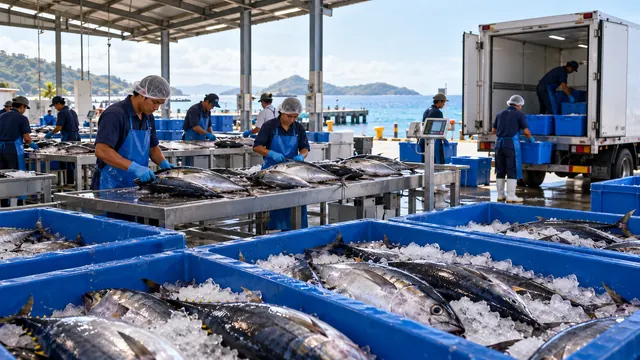
Dedicated Fishery Terminal, Cold Chain Staging & Marine Bunkering Hub
Develop a dedicated marine offloading jetty, cold storage consolidation depot, and bunker supply base serving Savu Sea and Timor Sea fishing fleets with direct land connectivity to KIB.
View details →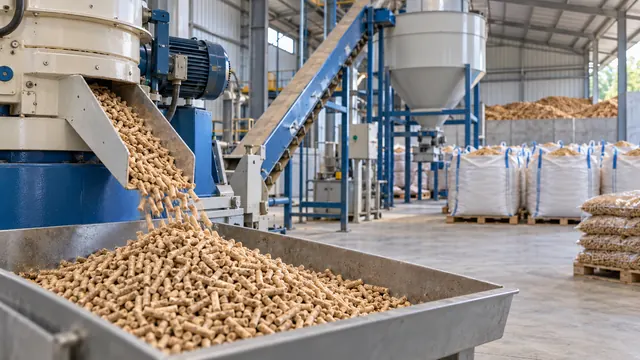
Biomass Wood Pellet & Agricultural Residue Fuel Processing
Produce high-density biomass wood pellets from fast-growing energy timber (Gamal, Calliandra) and dry crop residues to supply co-firing power plants and regional industrial boilers.
View details →