01BUSINESS OPPORTUNITY
Business Overview
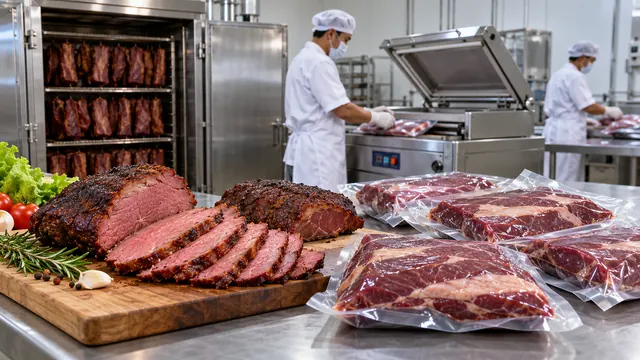
East Nusa Tenggara’s vast grasslands support 593,640 head of beef cattle (ranking 7th nationally in BPS agricultural data). Traditionally, cattle are shipped live on long sea voyages to Java, suffering punitive 10% to 15% liveweight transit shrinkage and high maritime freight costs. Establishing an integrated cattle lairage, humane abattoir, and meat processing plant in KIB reverses this inefficiency: local Timor cattle and in-transit Australian cattle are fattened and processed locally in Kupang, utilizing competitive local labor rates (UMR Kupang ~IDR 2.2–2.3M vs East Java ~IDR 4.5M). Boned-out prime cuts and carcasses are shipped in high-density reefer containers via Tenau Port (7.9 km) to Java and Bali, exported overland via the Trans-Timor corridor to Timor-Leste, and converted into hygienic vacuum-packed traditional smoked ‘Sei Sapi’ for nationwide retail distribution.
Products & Business Formats
- Vacuum-Packed Export & Domestic Prime Cuts (Tenderloin, Sirloin, Ribeye)
- Veterinary-certified (NKV Level 1) chilled and blast-frozen boneless primal cuts vacuum-packaged in high-barrier shrink bags for hotels, restaurants, and retail.
- Traditional Smoked Beef ‘Sei Sapi’ in Retort Pouches
- Authentic wood-smoked Timor beef cured with traditional spices, vacuum-sealed in shelf-stable retort pouches for nationwide supermarket distribution.
- Halal Certified Carcasses & Bone-In Quarters (Frozen)
- Quartered beef carcasses and bone-in fabrication cuts blast-frozen to -20°C for inter-island wholesale meat markets in Java, Bali, and Eastern Indonesia.
- Value-Added Offal & Animal By-Products (Hides, Blood Meal, Bone Meal)
- Commercialization of edible offal (tripe, liver, tongue), salted wet-blue cattle hides for tanneries, and rendered blood/bone meal for animal feeds.
Business model
Revenue comes from inter-island sales of frozen beef cuts (prime cuts and carcasses) to Java and Eastern Indonesia via reefer containers, meat exports to Timor-Leste, NKV/BPOM-certified vacuum-packed smoked sei sapi products, cutting and deboning services for importers/partner farmers, and by-product sales (cattle hides for tanning, offal, and feed bone meal).
Development stages
- Stage 1 — Use ready-to-lease buildings at KIB for chilled deboning and slicing rooms, controlled sei sapi smoking rooms, vacuum packers, and frozen storage.
- Stage 2 — Add meatball/sausage processing lines, blast freezers, and expand distribution networks to major cities via air/sea cargo.
- Stage 3 — Build large-scale NKV- and Halal-certified integrated meat-processing facilities on KIB HPL land plots, including regional fattening partnership opportunities.
02BUSINESS OPPORTUNITY
Market & Potential Buyers
East Nusa Tenggara is one of Indonesia’s primary cattle production islands, with official BPS data recording 593,640 head of beef cattle (ranking 7th nationally). Historically, cattle are loaded live onto slow inter-island livestock vessels to Surabaya and Jakarta, suffering catastrophic 10% to 15% liveweight transit shrinkage, high livestock mortality, and exorbitant sea freight costs. Fattening and processing cattle locally in KIB reverses this structural inefficiency: local Timor cattle and in-transit Australian cattle are slaughtered and fabricated in Kupang, utilizing competitive local labor rates (UMR Kupang ~IDR 2.2–2.3M vs East Java ~IDR 4.5M). Boned-out frozen beef is shipped via Tenau Port (7.9 km) in high-density reefer containers to Java and Bali, exported overland to Timor-Leste, and converted into high-value smoked ‘Sei Sapi’ for national retail.
Market Demand & Potential Buyers
- National supermarket chains, butcher networks, and food distributors in Jakarta, Surabaya, and Bali via scheduled reefer containers
- Cross-border commercial food importers and wholesale meat buyers in Dili, Timor-Leste via Trans-Timor highway trucking
- Regional hotel, restaurant, and catering (Horeka) chains throughout East Nusa Tenggara
- Nationwide retail consumers and souvenir markets purchasing authentic packaged smoked ‘Sei Sapi’
Market Evidence & Context
Massive Provincial Cattle Herd of 593,640 Head (BPS Data)
BPS agricultural census statistics confirm NTT’s status as a top-tier national livestock powerhouse, providing a vast local raw cattle procurement base. Beef Cattle Population by Province, 2024
Strategic Transit Nexus for Australian Live Cattle Import Corridors
Kupang sits directly on the maritime corridor connecting Darwin/Northern Australia to Indonesia (>90% of Darwin cattle exports sail to Indonesia); processing cattle in Kupang saves 1,200 nautical miles of live transit shrinkage. Bolok Industrial Park Profile
Significant Labor Cost Advantage (UMR Kupang vs Java)
Butchery, deboning, and meat fabrication are labor-intensive; Kupang’s competitive minimum wage (~IDR 2.2M) provides substantial operational margin buffers compared to Java (~IDR 4.5M–5.2M). Bolok Industrial Park Profile
Existing slaughter in Kupang is conducted in municipal abattoirs lacking blast freezers, cold deboning rooms, or certified vacuum packaging. Beef is sold warm in open-air wet markets without temperature control. Live cattle traders dominate the trade by shipping live animals to Java despite heavy weight shrinkage. A modern abattoir and meat plant in KIB delivering certified chilled/frozen cuts and authentic smoked Sei captures institutional corporate contracts.
03BUSINESS OPPORTUNITY
Raw Materials & Supply
Live cattle are procured through livestock aggregator networks across Timor Island, commercial feedlots, and licensed transit holding stations for imported cattle.
Raw material sources and requirements| Materials & Requirements | Procurement Source | Quality & Key Specifications |
|---|
| Live Beef Cattle (Bali Cattle & Brahman Cross / BX) | Livestock breeding cooperatives across Timor and imported Australian feeder cattle transit herds. | Healthy, veterinary certified, live weight 350–550 kg, finished with balanced nutrition. |
|---|
| Natural Hardwood for Traditional Smoking (Kesambi Wood) | Sustainable local forestry plantations in Timor. | Dense Kesambi wood (Schleichera oleosa) providing traditional authentic aroma and smoke flavor. |
|---|
| Food-Grade Multi-Layer Vacuum Shrink Pouches | Certified packaging converters in KIB / Java. | High-barrier EVOH/PA/PE vacuum shrink bags providing extended shelf life and zero freeze burn. |
|---|
Seasonality & Supply Continuity
Operating continuously year-round. Cattle supply peaks during the dry season (May–November). Retail demand for smoked Sei Sapi surges ahead of major holidays.
Collection & shipping
Live cattle arrive via dedicated livestock trucks directly to KIB lairage pens. Finished meat is drayed in reefer containers 7.9 km to Tenau Port or trucked to Timor-Leste.
Procurement & handling costs
Live cattle procurement represents 75%–82% of total operational cash costs. Operating in Kupang eliminates the 10%–15% live shipping weight shrinkage loss.
04BUSINESS OPPORTUNITY
Why Consider KIB
KIB provides the heavy industrial infrastructure: master AMDAL zoning for animal lairage and modular on-site wastewater treatment, low-cost labor, and direct port connectivity.
- Direct Gateway for Australian Cattle Transit & Local Timor Herds
- Kupang’s position in the Timor Sea makes it the most economical transit node to slaughter and bone out cattle locally before shipping dense frozen meat to Java. Beef Cattle Population by Province, 2024
- Competitive Regional Labor Wage Structure (UMR Advantage)
- Deboning, trimming, and artisanal smoking are labor-intensive; Kupang’s competitive wage structure provides major operating cost advantages over Java abattoirs. Bolok Industrial Park Profile
- Master AMDAL Zoning for Lairage & On-Site Modular Effluent Treatment
- Operating inside KIB gives legal certainty to install holding pens, bio-digesters, and on-site wastewater pre-treatment units without residential disputes. Bolok Industrial Park Profile
05BUSINESS OPPORTUNITY
Business Development Requirements
Investors can construct a full-scale veterinary-certified abattoir (50–100 head/day) on KIB HPL land parcels, or establish a meat fabrication and smoked Sei facility inside a leased warehouse.
Business process
- Live cattle receiving into covered lairage resting pens, ante-mortem veterinary inspection, and 24-hour fasting with water access
- Humane pneumatic stunning in certified restraining boxes, ritual Halal slaughtering, bleeding, and blood collection
- Mechanical hide pulling, evisceration, post-mortem veterinary inspection, and splitting into half-carcasses
- High-pressure sanitization wash, pre-chilling in carcass holding chillers (+2°C to +4°C for 24 hours) for rigor mortis resolution
- Deboning and primal cut fabrication in temperature-controlled cutting cleanrooms (10°C–12°C)
- Traditional smoking over natural Kesambi embers for ‘Sei Sapi’, followed by slicing and vacuum packing in retort pouches
- Rapid freezing in Air Blast Freezers (-40°C) down to -20°C core temperature, carton packing, and palletized cold storage
Initial Capacity & Production Scale
- Veterinary NKV Level 1 Certified Abattoir Infrastructure
- Modern overhead monorail carcass conveyor systems, pneumatic stunning box, stainless steel evisceration tables, and strict sanitary zoning.
- Temperature-Controlled Carcass Chillers & Blast Freezers
- Heavy industrial refrigeration maintaining +2°C carcass aging rooms, +10°C deboning rooms, and -40°C air blast freezing tunnels.
- Traditional Wood Smoking Chambers with Flue Scrubbers
- Custom stainless steel smokehouses with automated temperature logging and electrostatic smoke precipitators to capture excess emissions.
- On-Site Modular Wastewater Pre-Treatment & Bio-Digester Unit
- Under KIB’s estate AMDAL framework, tenant installs blood recovery tanks, anaerobic bio-digesters, and aeration ponds to treat high-BOD effluent before discharge.
Dedicated Production Facilities (Investor Scope)
Lairage holding pens, Halal stunning box, overhead monorail conveyor, carcass chillers, deboning cleanroom, blast freezer, Kesambi smokehouses, and on-site modular wastewater pre-treatment.
Eliminating the 10%–15% live shipping weight shrinkage and utilizing Kupang’s competitive labor wages to process beef locally yields unmatched cost advantages over traditional live cattle shipping to Java.
06BUSINESS OPPORTUNITY
Estate Facilities Available at KIB
Bolok Industrial Park (KIB) prepares Phase I with a total area of 191 hectares under clean & clear Right of Management (HPL) land titles with flexible plot sizing, alongside ready-to-lease standard industrial warehouses. The facilities below represent the core estate infrastructure provided by KIB, while tenant-specific production machinery and specialized civil/utility works remain the investor's scope.
- Phase I (Total 191 Ha HPL) & Flexible Plot Sizing
- Clean & clear HPL land title spanning 191 hectares in Phase I, with plot boundaries customized to factory or logistics yard requirements.
- Standard Ready-to-Lease Warehouses
- Basic turn-key warehouse structures ready for storage or lightweight modular machine assembly; specialized retrofits installed by tenant.
- Paved Heavy-Duty Main Estate Roads
- Dedicated estate road network engineered for heavy truck and container maneuvers connecting to Bolok Port (3.6 km) and Tenau Port (7.9 km).
- Clean Water Grid & Distribution Reservoirs
- Industrial water distribution network backed by on-site storage reservoirs; advanced water purification (e.g., RO/UV) configured per plant.
- Estate Electrical Power Grid
- Medium-voltage power grid connections for operational loads; dedicated transformers or backup generator sets installed per plant load profile.
- Fiber Optic Telecom & Estate Street Lighting
- High-speed optical fiber connectivity, environmental street illumination, and planned green buffer zones across the estate.
Site Suitability & Building Delivery Boundaries
Heavy industrial land plots (1.0–2.5 hectares) in KIB Zone I with adequate isolation buffer zones, dedicated livestock unloading ramps, and heavy drainage infrastructure.
Prospective investors are advised to consult with the KIB management team regarding exact plot sizes, standard warehouse technical specifications, electrical power capacity, and water flow rates prior to concluding detailed feasibility studies.
The management team of PT Kawasan Industri Bolok (Perseroda) assists local, national, and international investors (Timor-Leste, Australia, China, etc.) from initial site inspection through to leasing and operational licensing.
Estate Facilities Profile ↗BUSINESS OPPORTUNITY
Risks & Considerations
Primary operational risks include animal disease outbreaks (FMD/LSD), slaughterhouse wastewater compliance, and cold chain temperature abuse during transit.
- Livestock epidemic disease outbreaks (Foot and Mouth Disease / LSD) triggering animal movement bans
- Implement strict quarantine holding protocols, mandatory biosecurity vehicle disinfection tire-baths, and procure cattle exclusively from certified disease-free zones.
- High organic BOD/COD loading from slaughter effluent triggering environmental compliance violations
- Install dedicated blood coagulators, grease traps, and anaerobic methane-capturing bio-digesters to reduce organic loading by 85%+ prior to modular aeration.
- Cold-chain breakdown during container ocean transit causing meat discoloration and spoilage
- Deploy dual-sensor GPS satellite temperature trackers inside all export reefer containers with automated alerts for any temperature rise above -18°C.
08BUSINESS OPPORTUNITY
Studies & References
Data sources include BPS livestock population statistics for NTT, Indonesian Veterinary Public Health Regulations (Permentan NKV), and Australian live cattle export trade data.
Research· 2021
Quality Characteristics of Sei Smoked Beef at Various Smoking Durations and Temperatures
Jurnal Ilmu Ternak · Universitas Padjadjaran· Indonesia
Authors: Zulham Sunayardi, Roostita L. Balia & Lilis Suryaningsih
Read summary
Evaluation of smoking temperatures (60°C–75°C) and durations on tenderness, phenolic aroma deposition, and antioxidant activity in smoked beef, establishing technical operating windows for semi-automated smoking lines at KIB.
Accessed 2026-10-19
Technology Application· 2024
Sei Smoked Beef Processing Training for Nefo Tua Farmers Group
Jurnal Pengabdian Masyarakat Peternakan · Politani Kupang· Baumata, Kupang Regency
Read summary
Training on hygienic closed-cabinet smoking using native Kesambi firewood combined with vacuum packaging, improving the shelf life and microbiological safety of traditional NTT smoked beef for commercial retail.
Accessed 2026-10-19
Research· 2023
Supply Chain Analysis of Beef in Kupang City
Eduvest · Research by Universitas Nusa Cendana· Kupang City
Authors: Ronald P.C. Fanggidae, Paulina Y. Amtiran, Yury S. Fa’ah, Klaasvakumok J. Kamuri, Dominikus K.T. Aman
Read summary
Value chain mapping of beef flows from Kupang Regency farms to city wet markets and abattoirs, highlighting transit shrink losses and presenting the business case for centralized hygienic cold processing at KIB.
Regional Data· 2025
Beef Cattle Population by Province, 2024
BPS - Statistics Indonesia· East Nusa Tenggara & Indonesia
Read summary
Official BPS livestock census recording NTT beef cattle herd at 593.64 thousand head in 2024, ranking NTT among Indonesia’s premier cattle-producing provinces and securing steady raw material supply for meat processing at KIB.
Accessed 2026-10-19
Regional Data· 2024
WebGIS 2023 Agricultural Census (ST2023) of East Nusa Tenggara Province
BPS - Statistics Indonesia· East Nusa Tenggara
Read summary
Geospatial census mapping across NTT documenting 674,336 food crop production units (predominantly corn), 33,891 fishery business units, and 149,000 hectares of coconut estates, quantifying the hinterland supply base for KIB.
Accessed 2026-10-19
Regional Data· 2026
Strong Finish to the Year for Darwin Live Export Cattle Trade
Northern Territory Government (Australia)· Darwin, Northern Territory, Australia
Read summary
Official trade bulletin (January 29, 2026) reporting over 317,000 live cattle exported from Darwin, with Indonesia as primary recipient, illustrating maritime livestock connectivity and potential regional feeder logistics via Bolok.
Accessed 2026-10-19
Standards & Regulations· 2026
BPOM Regulation Number 11 of 2026 on Food Contact Packaging Materials
Indonesian Food and Drug Authority (BPOM)· Indonesia
Read summary
Sets migration limits, approved polymer lists, and non-toxic plasticizer requirements for packaging coming into direct contact with food, forming the mandatory regulatory baseline for packaging and food processors in KIB.
Accessed 2026-10-19
Technical Guide· 2024
Understanding the Cold Chain to Preserve Fish Quality
Ministry of Marine Affairs and Fisheries (KKP)· Indonesia
Read summary
Technical guidelines from the MMAF Quality Agency outlining cold chain management (measured ice-to-fish ratios, chilled/frozen temperature-controlled storage, and refrigerated transport) across the supply chain from initial catch to distribution.
Accessed 2026-10-19
Industrial Park & Logistics
Kupang Container Terminal Service Profile
PT Pelindo Terminal Petikemas· Tenau, Kupang
Read summary
Kupang Container Terminal at Tenau Port (7.9 km from KIB) handles dry and refrigerated container cargo (reefer plugs) with scheduled feeder connections to Surabaya, Makassar, and national shipping routes for raw materials and outbound finished products.
Accessed 2026-10-19
Industrial Park & Logistics· 2026
Road Distances from KIB Bolok to Key Port, City, and Airport Hubs
OpenStreetMap · OSRM Routing· Bolok, Tenau, Kupang City & El Tari Airport
Read summary
Calculated highway route distances from KIB Bolok: 3.6 km to Bolok ASDP Ferry Terminal, 7.9 km to Tenau Container Port, 14.5 km to central Kupang commercial district, and 25.0 km to El Tari International Airport.
Accessed 2026-10-19
Industrial Park & Logistics
Bolok Industrial Park Profile
PT Kawasan Industri Bolok (Perseroda)· Bolok, West Kupang
Read summary
Official profile of the Bolok Industrial Park (Phase I covers 191 hectares with clean & clear HPL land title, flexible lease plots, ready-to-use standard factory/warehouse units, paved primary roads, clean water reservoir system, three-phase industrial power, and fiber-optic connectivity).
Accessed 2026-10-19
BUSINESS OPPORTUNITY
Next Steps
Interested in developing this business at KIB?
Submit target slaughter capacity (head/day), lairage footprint, and water/power requirements to KIB management to review designated heavy industrial plots.
Discuss your business plan ↗ Complete your business supply chain
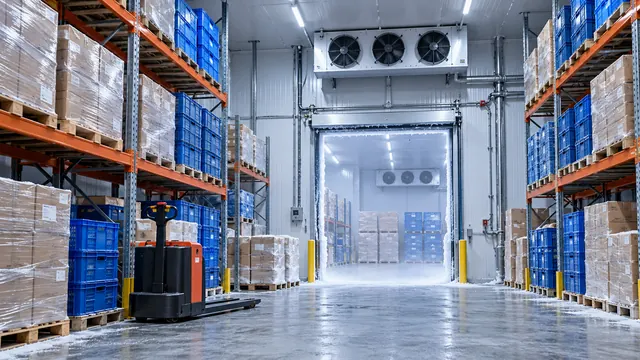
Multi-Temperature Commercial Cold Storage & Reefer Container Depot
Independent multi-temperature cold storage facility (-25°C frozen / +4°C chilled) and reefer container plug-in depot serving seafood, meat, poultry, and pharmaceutical supply chains in Timor.
View details →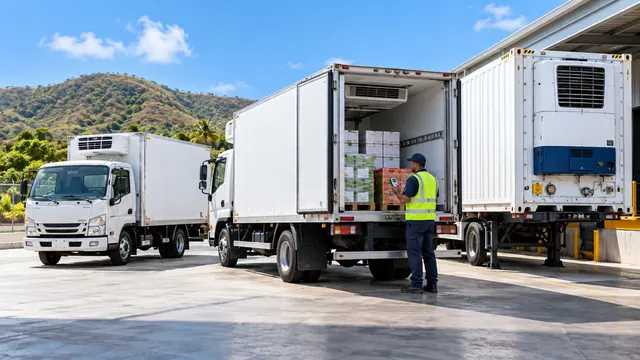
Refrigerated Transport Fleet & Cold Chain Drayage Services
Deploy a specialized fleet of temperature-controlled refrigerated trucks (2–10 tonnes) and multi-axle reefer container chassis supporting cold-chain logistics across Timor and inter-island gateways.
View details →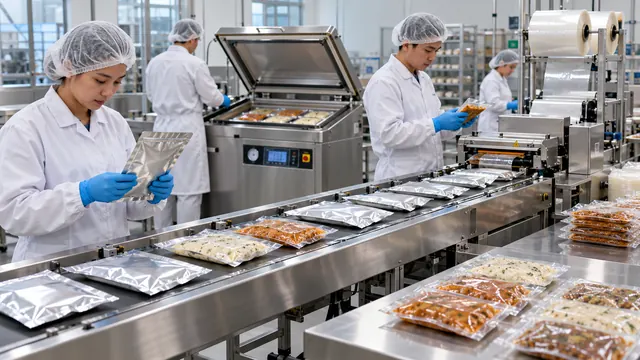
Food-Grade Flexible Packaging, Vacuum Bags & Retort Pouch Converting
High-barrier multi-layer flexible packaging, three-side seal vacuum bags, and retort pouches manufacturing facility supplying seafood, meat, and agro-processing industries in KIB and across NTT.
View details →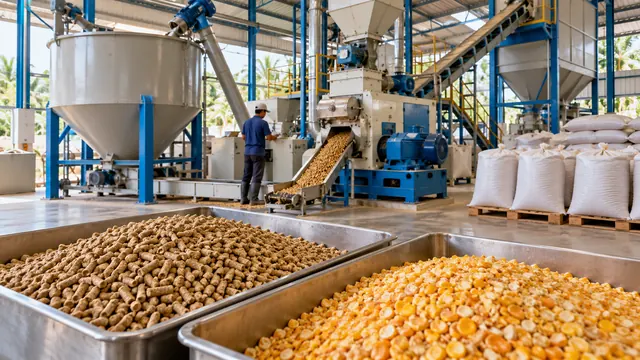
Integrated Commercial Livestock & Aquaculture Feed Manufacturing
Manufacture balanced commercial feeds for swine, cattle, poultry, and aquaculture by consolidating Timor corn, local fishmeal, and limestone with high domestic resource cost advantage.
View details →